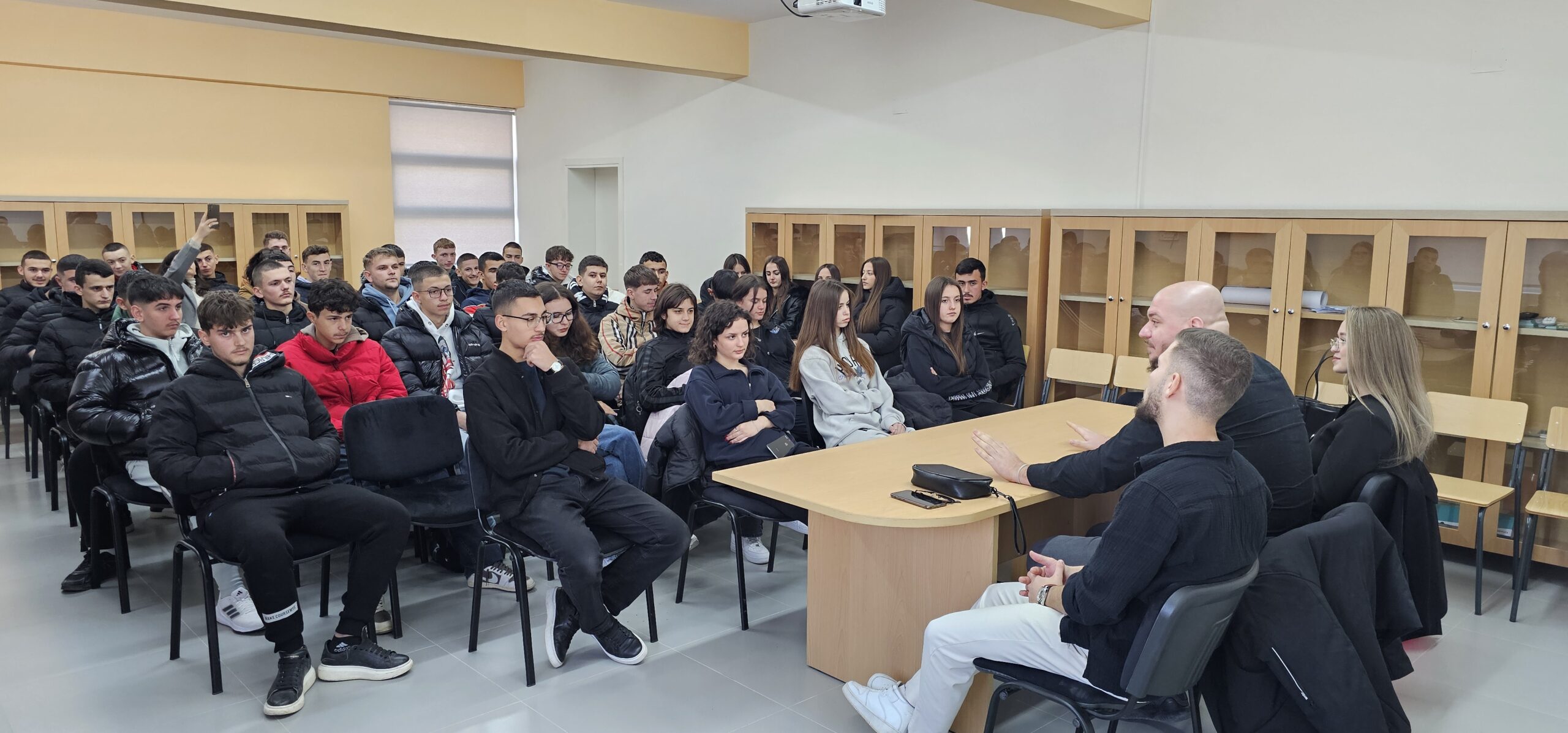
The youth ecosystem of Durrës took a strategic leap forward this week as 20–25 young participants convened to explore the value proposition, mission, and transformative potential of Dimegra, the emerging digital governance and civic participation initiative designed to future-proof communities through innovation, inclusion, and data-driven decision-making. Hosted in a collaborative, high-energy environment, the session created a runway for dialogue between young citizens and the digital solutions shaping Albania’s governance landscape. Participants were introduced to Dimegra’s integrated platform, its core capabilities, and its long-term ambition to strengthen civic engagement, transparency, and local development outcomes. A Front-Row Experience in Digital Citizenship The workshop delivered a hands-on immersion into how technology can fuel smarter public services and more responsive local institutions. Through guided discussions and live demonstrations, the youth cohort gained insight into: Participants were encouraged to evaluate real-world use cases, challenge assumptions, and propose forward-leaning ideas that could be integrated into future development phases of the Dimegra platform. Cultivating a New Generation of Digital Leaders This engagement wasn’t simply an information session—it was a capability-building moment. The event positioned young people as active stakeholders, not passive beneficiaries, reinforcing Dimegra’s commitment to inclusiveness and co-creation. Feedback captured during the session indicates strong enthusiasm for: The energy in the room underscored a clear message: Durrës holds a vibrant pool of young talent ready to champion digital transformation across local institutions. Driving Regional Momentum This youth engagement activity represents a key touchpoint in Dimegra’s broader rollout strategy, ensuring that young citizens—often the earliest adopters of new technology—have a voice in shaping the digital infrastructure that will define their future. As the project continues to expand across Albania, the lessons and insights from Durrës will feed directly into the design of more user-centric, accessible, and high-impact digital governance solutions. A Step Toward a More Connected Albania Empowering youth is not a side initiative—it’s a strategic priority. With Dimegra at the forefront, sessions like this are paving the way for a more agile, transparent, and citizen-driven governance model. The young people of Durrës demonstrated that they are ready to contribute, innovate, and lead. And Dimegra is ready to enable them.
Why Media Literacy Is Our Best Defense Against Disinformation
In today’s digital world, information moves faster than ever. News feeds refresh in seconds, videos go viral in minutes, and misleading content spreads across borders with no regard for truth or consequences. This fast-moving environment creates what UNESCO calls an “information fog” — a chaotic landscape where facts, fiction, emotions, and manipulation collide.According to UNESCO’s Journalism, Fake News & Disinformation Handbook, media literacy has become an essential life skill, not only for journalists but for every citizen navigating the modern information ecosystem. Understanding Media and Information Literacy (MIL) Media and Information Literacy (MIL) is far more than just knowing how to use technology. It is a holistic framework of competencies that enables people to access, analyze, evaluate, and create information responsibly. UNESCO describes MIL as an umbrella that covers various literacies: These interconnected skills help individuals understand how information influences their identity, emotions, and worldview. MIL is not just academic. It shapes how people participate in democracy, how communities resist manipulation, and how youth—particularly those active on social media—learn to distinguish credible information from deliberate deceit. Misinformation, Disinformation & the Rise of ‘Information Disorder’ One of UNESCO’s most valuable contributions is its explanation of information disorder, a term that refers to the many ways information can be distorted. According to the handbook, disinformation is not a side-show—it is a direct threat to journalism, social cohesion, and democratic processes. A graphic in the handbook identifies different types of misleading content, from false context and misleading headlines to fabricated imagery designed to deceive. Understanding these categories is the first step toward building resilience. Learning to Think Critically: The Core of MIL The UNESCO handbook emphasizes that media literacy is deeply connected to critical thinking. Students and citizens must learn to: This intentional and reflective process—called “Purposeful Reflective Judgment”—helps individuals move beyond passive consumption toward active evaluation. How Disinformation Mimics Journalism One of the most eye-opening concepts highlighted in the material is how easy it is for misleading content to imitate the appearance of real news.Through structured exercises, the handbook teaches students how “journalese”—the stylistic features of journalism—can be exploited to make fabricated stories look believable. Participants learn to identify signals of authentic journalism, such as: And compare them with the tactics used in deceptive content. From Theory to Practice: Hands-On Verification Skills MIL is not just conceptual. UNESCO emphasizes that practical skills are essential in fighting digital misinformation. In its modules, learners explore how to: These techniques form the foundation of modern fact-checking, enabling learners to challenge the authenticity of digital content. Such hands-on verification training is crucial at a time when misinformation often spreads through visual media—images, memes, and edited videos. Why Media Literacy Matters More Than Ever UNESCO’s message is clear: media literacy is not optional. It is vital to: The handbook notes that fighting disinformation requires collaboration between media organizations, educators, civil society, and citizens. By developing MIL skills, young people in particular become more resilient, more informed, and more capable of engaging in society constructively. Conclusion: Media Literacy Is a Skill for Life The digital landscape may be complex, but MIL provides the tools everyone needs to navigate it. UNESCO’s comprehensive framework and training modules demonstrate that combating misinformation starts with education, awareness, and critical thinking. As projects like DIMEGRA aim to empower youth and strengthen cultural identity, integrating UNESCO’s MIL principles becomes a powerful strategy for building a more informed and resilient community.